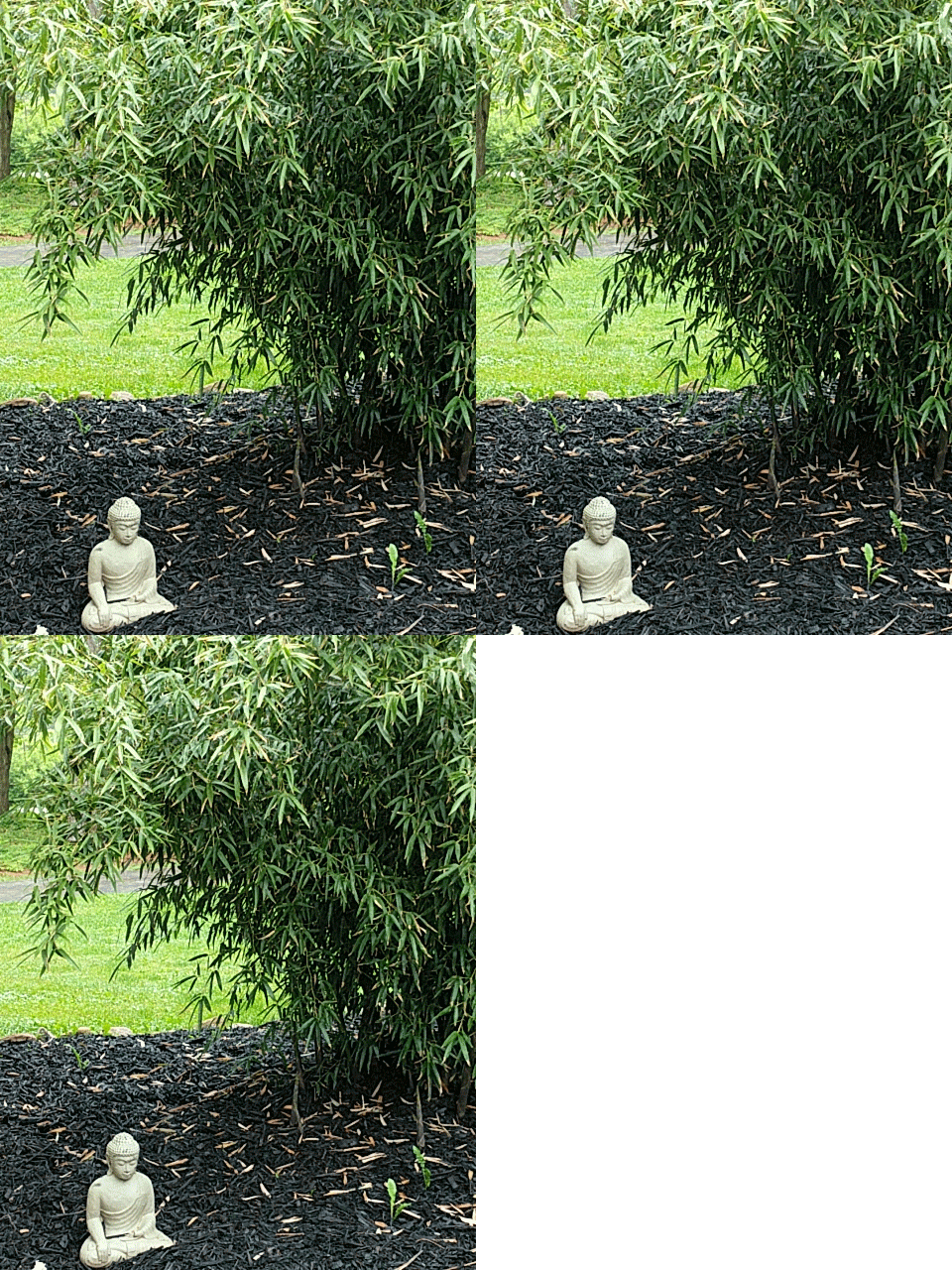
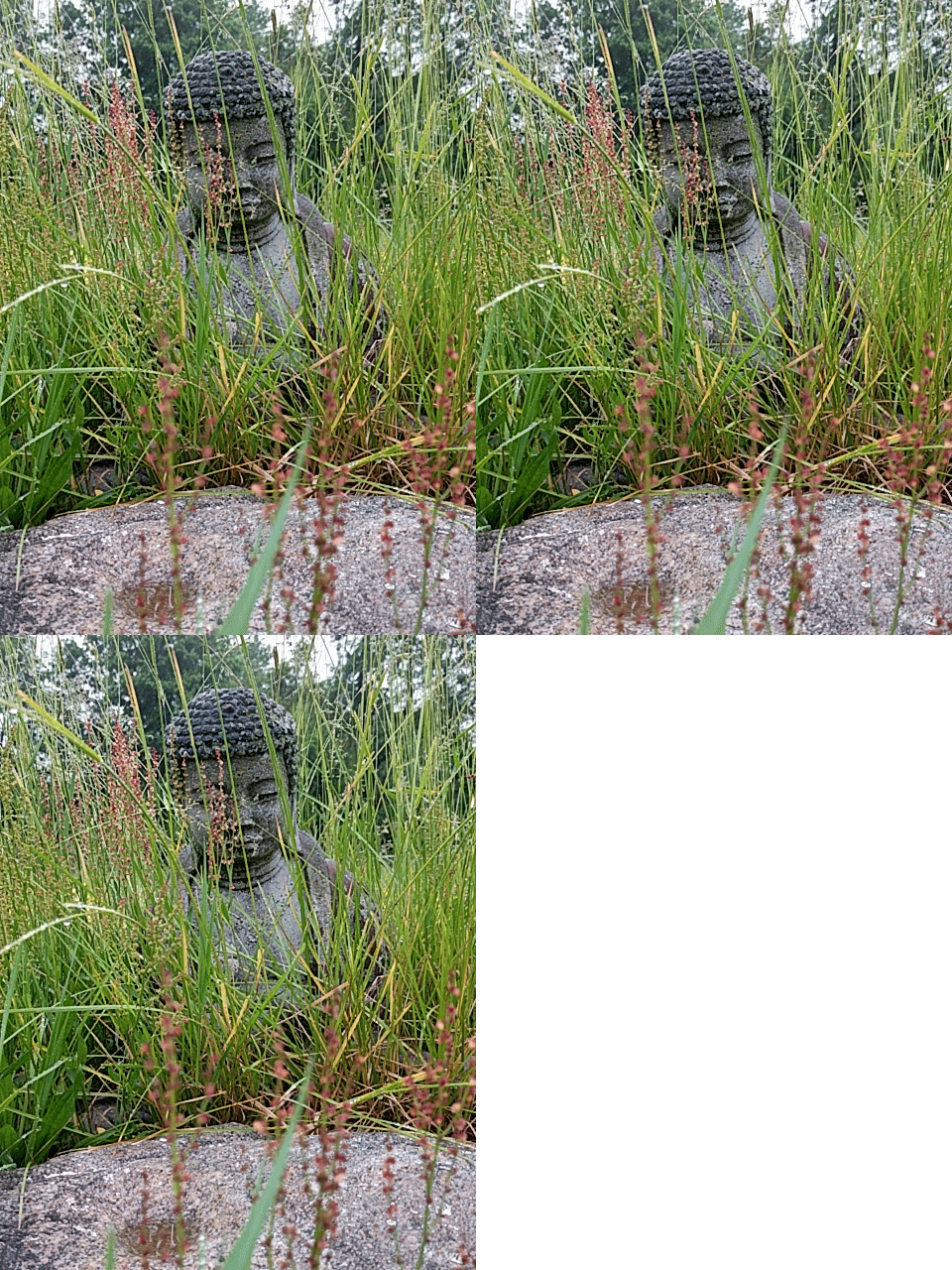
Life by nature is a challenge, and many times we are on a learning curve. Sometimes that curve is exhilarating, and sometimes it is confusing and heavy. We do our best. With patience and strength we work through the waves of karma as they crash upon us. Zen Practice allows us a strong footing, so we are not constantly knocked over by the ebb and flow of the universe. It is said in zen to just “march on”. No matter if the sun is upon our check, or the cold winds bare down on us, we just keep moving forward. We watch not to become caught, or stuck in deep currents of phenomena; even if they are comforting and pleasurable. The Zen Student is always traveling, and her supplies are not that of heavy preference and nostalgia. The Zen Students pack has only the robe of liberation to drape over the universe, and a small bowl to collect the subtle offerings of the falling sakura. So I invite to put down the load, carry only what you need, and “March on” through this journey we call life.
Blue Mountain Zendo offers formal Rinzai Zen Training for those who are interested in a deeper level of commitment and practice. These training paths are open to everyone, and Koryu-ji will offer all available accommodations to allow those with disabilities to ordain. Koryu-ji is a welcoming sangha, and believes that diversity enriches its members while encouraging an open heart and mind.
Lay-path
Refuge (Triple Jewel)
Anyone can request to take Refuge at Koryu-ji whether they are a member or not. There is no requirements other than a basic understanding of the Three Jewels. Traditionally a Juzu (mala) is used to mark this ceremony.
Jukai (Precept taking)
The rank of Jukai is the formal admission into Sangha via the taking of the *”The Sixteen Precepts”. A student is required to attend weekly zazenkai and sesshin (retreat) for a one year period. This rank is many times called a “Lay Ordination”. Traditionally a Rakasu is bestowed upon the initiate along with a Dharma Name and certificate.
The Three Refuges (Three Treasures)
I take refuge in the Buddha. I take refuge in the Dharma. I take refuge in the Sangha.
The Three Pure Precepts
I vow not to do harm. I vow to cultivate compassion. I vow to love others.
The Ten Grave Precepts
I take up the way of not killing, and vow to cherish all life. I take up the way of not stealing, and vow to respect that which belongs to others. I take up the way of not misusing sex, and vow to be honest and respectful. I take up the way of not lying, and vow to speak the truth. I take up the way of not misusing drugs or alcohol, and vow to keep the mind clear. I take up the way of not gossiping about others’ faults, and vow to be understanding and sympathetic. I take up the way of not praising myself by criticizing others, and vow to overcome my own shortcomings. I take up the way of not withholding spiritual or material aid, and vow to give freely when needed. I take up the way of not unleashing anger, and vow to seek and extinguish its source. I take up the way of not speaking ill of the Three Treasures, and vow to cherish and uphold them.
Rank of Sensei (Master)
The rank of Sensei is a formal recognition of a “lay teacher”. A Sensei must have taken Jukai, practiced for at least ten years and have attended 60 Sesshin or more. The sesshin may range from 3-12 days.
Path of the Monk/Priest
Path of a Postulate Monk/Priest
The path of a “Postulate Unsui” (cloud water) or “Postulate Priest” is a tentative ordination bestowed upon an initiate. Due to the PT schedule of Koryu-ji, what normally takes one year of FT training, takes two years at Koryu-ji. Postulate students must attend all zendo activities as well as meeting various training requirements. To encourage those seeking Unsui ordination, Koryu-ji offers a postulate ordination which allows the postulate to live as a novice monk under the guidance of a teacher after the first year. Within the two year training period, both the postulate and the teacher may terminate the training arrangement at any time. The postulate retains his Jukai name/rank but, looses the rank of Unsui. The “Postulate Unsui” is welcome to reinitiate the training process, beginning once again at the one year mark.
Rank of Priest(Jushoku)
The training of a priest and a monk are almost identical. The main difference between the two is the monk lives at either a temple or a monastery, while a priest typically does not. A priest may run a zendo or a temple, yet also have an outside job. A priest is focused on meeting the needs of the local community by offering various teachings, ceremonies and services.
Rank of Unsui (Cloud/Water)
The rank of Unsui requires two years of supervised training. This includes, memorizing sutra, services, instruments, form and personal koan practice. An Unsui is still encouraged to attend all zendo activities, however, the schedule is more flexible than the “Path of a Postulate”.
Rank of Osho (Tranquil Monk)
The rank of Osho requires Unsui Ordination, sixty weeklong sesshin, ten years of temple or sangha experience and the endorsement of a Roshi.
Blue Mountain Zendo has operated within Eastern Pennsylvania for twenty years, offering authentic Rinzai Zen Practice. Community outreach programs such as; public lectures, interfaith meetings, chaplaincy, crises placement, meditation workshops and animal/enviromental advocacy have been the focus of the temple since its inception. Blue Mountain Zendo is maintained by its abbot Joriki Baker, Osho and a small order of laywomen/men who call the zendo their spiritual home. Blue Mountain Zendo is a registered non-profit and is supported soley by outside contributions. The temple has never required fees or dues. It operates in the tradition of Dana (charity), and once a year the sangha (congregation) reaches out to the greater spiritual community to gather donations which will carry the zendo through the cold winter months. The temple is heated primarily via woodstoves, with baseboard supplimental heat. Our woodstoves and chimneys are in need of fall maintenance, and our yearly heating expenses run around $3,000. With deep gratitude and a reverential heart, we are reaching out to our brothers and sisters in the greater spiritual community, and asking for support so that we may continue to offer a refuge for all those who seek truth and spiritual awakening. It is Blue Mountain’s Zendo’s vision to lend aid to anyone who seeks a safe harbor from pain and suffering whether that means holding meditation services for men and women or offering a warm and safe place for abandoned or injured animals. It is our beleif that all life is precious and it is our responsiblity to both respect and nurture it.
Samu Weekend is an opportunity to experience Zen Training in an engaged environment. Most understand Zen Practice to be a purely motionless and austere practice, however, Zen is alive and moves with the turning of the wheel of Dharma. Zazen (meditation) is our anchor which keeps us grounded as we move and sway with the movements of our fluid lives. Learning to move, while remaining still, is a wonderous consciousness that opens us to the vastness of our true nature. During “Samu Weekend”, we are grounded through true fellowship, the sangha (congregation) engages in activities that open the heart and mind and deepen our interconnection with the world around us. Samu Weekend is an opportunity to experience Zen Training in an engaged environment. Most understand Zen Practice to be a purely motionless and austere practice, however, Zen is alive and moves with the turning of the wheel of Dharma. Zazen (meditation) is our anchor which keeps us grounded as we move and sway with the movements of our fluid lives. Learning to move, while remaining still, is a wonderous consciousness that opens us to the vastness of our true nature. During “Samu Weekend”, we are grounded through true fellowship, the sangha (congregation) engages in activities that open the heart and mind and deepen our interconnection with the world around us. These activities include: planting flowers, vegetable gardening, landscaping, and temple cleaning. There will also be zazen (meditation), teisho (sermons), formal meals, chanting and sutra study. Unlike Sesshin (meditation intensive), Samu Weekend is not as formal and although we encourage silence, there are opportunities during the day to ask questions and engage in conversations based upon the Sutra we are exploring. Samu Weekend is also great for those who are interested in Zen, although, have yet to explore formal practice. We ask for a $75 donation or $50 in flowers, trees or bushes. If you bring greens, you will be planting them, so please plant something that you can grow with. Blue Mountain Zendo looks forward to your visit and aspires to allow people from all backgrounds to attend retreats. If there is perceived barrier for attendance, please feel free to call and we will attempt to work together to accommodate any special needs which need to be addressed.hese activities include: planting flowers, vegetable gardening, landscaping, and temple cleaning. There will also be zazen (meditation), teisho (sermons), formal meals, chanting and sutra study. Unlike Sesshin (meditation intensive), Samu Weekend is not as formal and although we encourage silence, there are opportunities during the day to ask questions and engage in conversations based upon the Sutra we are exploring. Samu Weekend is also great for those who are interested in Zen, although, have yet to explore formal practice. We ask for a $75 donation or $50 in flowers, trees or bushes. If you bring greens, you will be planting them, so please plant something that you can grow with. Blue Mountain Zendo looks forward to your visit and aspires to allow people from all backgrounds to attend retreats. If there is perceived barrier for attendance, please feel free to call and we will attempt to work together to accommodate any special needs which need to be addressed.
Weekend Sesshin are a great opportunity to experience Zen Monastic practice. Come join the Blue Mountain Sangha for Summer Sesshin, and gain insight into your true nature.
“Sesshin”, literally “to collect the mind”, is the Zen Buddhist seclusion or intensive period, consisting of one to ten days of silent meditative practice. Included in these periods are daily Zazen, Dharma Talks/Teisho (sermons), Samu (work) periods, and private interview/meeting (Dokusan) twice daily with Ryuun Joriki Baker, Osho. During Sesshin, the Zen Student concentrates on nothing but collecting the scattered energies of the mind, so they may realize their place within the universe, as the universe. Much of the times, this “place” feels hidden from us in our daily lives, and as a result, we seek outwardly for that we perceive we are lacking. Deep insight into our core nature occurs when we least expect it. These seemingly random experiences stir within us something systemic to our very being. Something which consumes us without a trace. This nature, our nature, is the root of the universe itself. This nature is always present, however, we are blinded by the habitual ego projection, and we just miss it! When we do experience these subtle insights, these quick flashes of light and sparks, they stoke the flames of our core, and we burn brighter and brighter. Although sadly, for most, these flames grow cold once again; they are left unattended and un-nurtured. However, for those few men and women who tend to this burning ember, it grows stronger and stronger until a flame rises up and illuminates the darkness of ignorance. For centuries, philosophy and theology have tried to explain this process, their attempts intrinsically shallow and hollow at best. The awakened mind is beyond word and letter. The path is straightforward, and honest in approach. It reveals itself fully in each unfolding moment. This honest and straightforward readiness to let go of our preconceived ideas and attachments, is the catalyst from which the restorative process begins. Sesshin is a time to dedicate ourselves to the exploration of this great matter, and a time to heal the scars which have long limited our true freedom and happiness. We hope you will come and explore with us, this most noblest of endeavors.
Obon or “Ullambana” (S) is a Buddhist festival which invites us to celebrate our connectedness to our ancestors. Obon reminds us that we have a great responsibility to repay our deceased family/friends for the love and sacrifice they offered us. The Buddha said, “The gravity of the debt we owe to our parents is as boundless as the heavens.” The celebration of Obon symbolically repays some of this debt, by reaffirming our responsibility to honor our families and loved-ones. It also reminds us to treat all sentient beings with compassion, understanding and patience. During Obon, we celebrate the lives of our ancestors/friends, by inviting them to enjoy an evening of live music, food and drink with us. Through our being, our ancestors once again visit with us, reminding us of their presence within our lives; within every breath we take, they sit in shadow, hidden by our linear mind, awaiting for their names to once again be called.
Obon is celebrated in mid-August, this year it will be celebrated on August 19 2017, and has been celebrated since the 7th Century. Obon finds its roots within the Urabon Sutra, and it is based on the teachings of Gotama Buddha. The Urabon Sutra contains the story of a monk called Mokuren Sonja who through his meditative practice sees that his deceased mother has become entangled within the realm of hungry ghost. Mokuren Sonja, soon after, asks the Buddha for his guidance on the matter. The Buddha instructs Mokuren to be compassionate to the young monks who were just returning from a retreat and offer alms. In return, Mokuren’s efforts frees his mother from her torment, and allows her to ascend to the pure land/heaven. Today’s Obon celebration keeps this spirit of giving alive. Through the celebration of Obon we give our love, respect and remembrance to those who have come before us. We open ourselves to an unseen interconnected web which bonds us all together. Obon is a time for deep reflection; however, it is also a time of great celebration.
Obon at Blue Mountain Zendo is open to the public and you do not need to be Buddhist to attend. The ceremony begins with the lighting of the temple lanterns and the bonfire which guide our ancestors back home. Pictures of our ancestors are then placed on the main alter while lanterns are offered to individuals to decorated. This decoration time is a fun time for the kids, they get to color and decorate while they are reminded of family they may have never met, or who they only knew for a short time. Family is something that is too often forgotten in this culture, and without their efforts, we would not have the honor of this life. A vegetarian meal is then served in an atmosphere of live classical music. After dinner, a special service and Dharma talk are offered outside under the stars. During this service, the names of the deceased are recited by the temple priest, while the lanterns are lit and placed in rows along the alter. Rice and water are then offered to the hungry ghosts. After the completion of the ceremony, thanks are offered during a period of silent contemplation; when ready, participants say goodbye to their loved one by extinguishing their lantern’s flame. To conclude, the community turns and faces the bonfire while it is extinguished and the spirits are sent home.
Gassho friends, Blue Mountain Zendo was making plans to do our annual fund raiser for Obon, however, as Lennon stated, “Life is what happens while you are busy making other plans”. Our 15-year-old riding mower has made its last cut. The engine and electrical system have been damaged beyond repair, and it is time to acquire a new (used mower). The temple sits on two acres of grass lands, and on average it takes 3 hours to complete the bulk of the grounds with the riding mower. In other words, it is a necessity. We humbly ask for your dana (charity) as Blue Mountain is a 501c3 and relies on the generosity of people just like you.
For those seeking private Zen Instruction or spiritual dialog (mondo), Rev. Ryuun Joriki Baker, Osho offers private sessions on Wednesday afternoon and evenings. Private sessions are 60 minutes long and include 30 minutes of Zen dialectic therapy, followed by 20 minutes of meditation instructions. This balance of Zen Dialog and meditation creates a spiritual platform which addresses the core internal factors that either manifest a consciousness of suffering and separation, or peace and unity.
“Sesshin”, literally “to collect the mind”, is the Zen Buddhist seclusion or intensive period, consisting of one to ten days of silent meditative practice. Included in these periods are daily Zazen, Dharma Talks/Teisho (sermons), Samu (work) periods, and private interview/meeting (Dokusan) twice daily with Ryuun Joriki Baker, Osho. During Sesshin, the Zen Student concentrates on nothing but collecting the scattered energies of the mind, so they may realize their place within the universe, as the universe. Much of the times, this “place” feels hidden from us in our daily lives, and as a result, we seek outwardly for that we perceive we are lacking. Deep insight into our core nature occurs when we least expect it. These seemingly random experiences stir within us something systemic to our very being. Something which consumes us without a trace. This nature, our nature, is the root of the universe itself. This nature is always present, however, we are blinded by the habitual ego projection, and we just miss it! When we do experience these subtle insights, these quick flashes of light and sparks, they stoke the flames of our core, and we burn brighter and brighter. Although sadly, for most, these flames grow cold once again; they are left unattended and un-nurtured. However, for those few men and women who tend to this burning ember, it grows stronger and stronger until a flame rises up and illuminates the darkness of ignorance. For centuries, philosophy and theology have tried to explain this process, their attempts intrinsically shallow and hollow at best. The awakened mind is beyond word and letter. The path is straightforward, and honest in approach. It reveals itself fully in each unfolding moment. This honest and straightforward readiness to let go of our preconceived ideas and attachments, is the catalyst from which the restorative process begins. Sesshin is a time to dedicate ourselves to the exploration of this great matter, and a time to heal the scars which have long limited our true freedom and happiness. We hope you will come and explore with us, this most noblest of endeavors.