

Private Zen Instuction
Private Zen Session is a unique opportunity to meet with Zen Monk Ryuun Joriki Baker, Osho. Joriki has practiced Zen Buddhism for over 30 years and is a recognized Zen Teacher (Osho) within the Rinzai Zen Lineage. Private session opens the opportunity to explore Zen Practice in an environment conducive to the expedient tools taught within the Zen tradition. These expedients help us to rediscover the human condition and reclaim our balance and happiness. This approach is best done in person as much of the critical information that is conveyed is lost within online formats and written word.
A focused environment or “Zen space” is an essential tool in soothing the mind and body thus, creating a respite for the fragmented mind. In our modern world of multi-tasking and overstimulation, the “wind-up” that is experienced can lead to chronic stress and a vague sense of disconnection. What we commonly call mind, we tend to think of as purely an internal affair. However, the mind is an active processes that meshes both the internal and external. The skandas or senses are the gateways to the mind, they are the windows from which we experience the world around us. Thoughts are the processing and storage of that information. By learning to regulate these gates via exposure “step-up”, we create a conductive space from which to build upon. Through this mindful space, we learn how our environment can affect our inward state. All the tools within the “Zen Space” address this Dharma. For example, incense (olfactory), lighting (optic), body (posture), auditory (silence), thought (essential) are all addressed in the practice environment.
The teacher (Osho), or spiritual friend, is also an important tool within the Zen Tradition. Many people turn to a book or the internet looking for quick spiritual guidance. Quick remedies almost always end quickly in disappointment. These venues can be inspiring and may appear to offer a neat outline but, after a couple of weeks, we find ourselves disenchanted and off seeking the next quick fix. Like a bee jumping from flower to flower seeking substance, so we hop from book to book, app to app, and even tradition to tradition – “Paper pancakes don’t satisfy hunger”. Osho don’t possess magical abilities, nor are they in any position to give you anything, especially so called “enlightenment”. What they do offer is the experience of a 2,800 year old Buddhist Tradition which has been refined into what we know of as modern Rinzai Zen. With this experience and guidance, the Osho is a guide who enriches a student’s journey, as they walk their OWN path. The work must be the student’s own. Commonly, the access to an Osho is limited by the group (sangha) size and satisfied in interview or “Dokusan”. Interview is the time when you offer your spiritual work and questions. The teacher will then offer enrichment quickly, and then the encounter is over. With private session there is more time to explore the practice and build an essential relationship with someone who has dedicated their lives to the “way” of Zen and ultimately, to you! Ideally, the teachers has been recognized by the quality control mechanism of a lineage.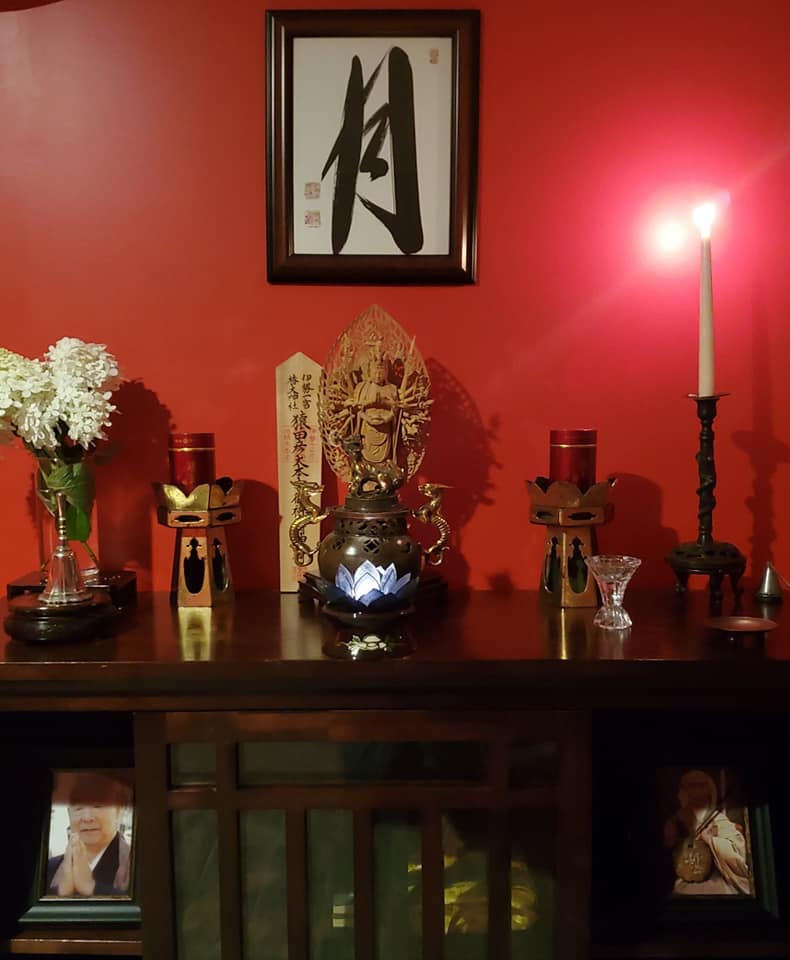
Integrated Koan work is another tool that is used in Private Session. Koans are an expedient that is central to Rinzai Zen Practice. Koans are gateless gates which invite a student to explore and experience “kensho” (to see into). How do Koans and “kensho” help me to find a better and more fulfilling life? If you remember, I previously stated that our consciousness is a fusion of both the external and internal world. Koans address our inward state by poisoning the well – just a little bit. The koan puts a wrench in the cogs of the logical mind and causes havoc. No matter how hard we attempt to approach koans with logic, it always ends in frustration and failure. Like a moth to light, we just keep bumping and crashing, no matter how hard we try to free ourselves from it, we feel trapped. This is the poisoned well, this is our inward state when confronted with a koan. There is an old saying that “If you’re a hammer, everything looks like a nail.” Logic is a wonderful tool, although it is one of many. If we become habituated to using only one tool, we will inevitably miss the moment and experience a sense of inner conflict. In other words, we will feel at odds with ourselves and the world around us. Koans help us to recover our full potential by strengthening our “intuitive intelligence”. This intelligence is not limited by mere sophistry and logic. Intuitive intelligence is what grounds and unites us to world we live in. It is our tether, and its domain is that of feeling and direct experience. It is essential for a healthy and deep sense of belonging. This intelligence is often ignored, and viewed as inferior to logical intelligence, yet it is just as fundamental to our being as its logical counterpart. By changing our inward state, via koans, the world around us also changes. Our inward pain, stress and trauma, organically dissipate as we realize a depth that allows us to transform seeming poison and suffering into needed remedies.
“Reflections” are another tool within sessions. Although, Joriki does not rely on guided meditations, he does use “reflections” which are expedients that set the “feel” or “direction” to build upon. These “Reflections” can be thought of as “setting the stage” for the activity of a specific Koan. There are myriads of states of consciousness and exploring them all is impossible. Yet, there are several fundamental states which all others arise from. Often, our state of consciousness is stuck due to habituation. This is due to engrained responses based on a fragmented and limited recollection of the past and projection of the future. For example; we have a bad day at work. Things are just not going our way! In return, we automaticly react and become angry and stressed. It is as though we are on autopilot. All we can do is just hold on for the ride. Suddenly the skies are black, and the world has taken an ominous turn. Identifying and correcting these habitual energies is key for not just short-term results but, lasting results. “Reflections” offer an acute tool in addressing a chronic state brought on by maladaptive behaviors and thoughts. Over time, and with practice, these “Reflections” enrich our present consciousness and replace a maladaptive and limited experience, with a rich and healthy present.
If you are interested in a Private Session with Joriki, please reach out to Blue Mountain Zendo at the contact point below. Sessions are available weekday late afternoons/early evenings and Sunday afternoons 2-4 or 7:30 to 9:00pm.
Phone – 484-735-0635 (Please leave a message)
Email – Joriki@bluemountainzendo.org
The Dragon’s Gate
It is always the dragon! There is a famous lore called the “Dragon’s Gate” that is used in Zen often. For those of you who are not familiar with the story, I will offer a quick explanation. The lore takes place in rural China upon the Yellow River; this is a real location. In this story there are countless carp which spawn every year within the river. After swimming countless miles upstream, they gather at a deep pool at the foot of a waterfall called the “Dragon’s Gate”. The carp give pause there, while building their fortitude for one last struggle to summit the Dragons Gate. It is all or nothing! It is said that late at night, in the midst of the bright summer moon, the golden carp unify, mounting for one last battle. Most will fail, even after weeks of struggle they will give up and swim back down to the mild valley waters. However, there are a few who remain poised for the attack. They build up so much energy that they begin to glow with a brilliant golden light. In a blinding flash, they travel up the falls will so much power that they breach the water’s surface and sail into the heavens. They sail so high that they garner the attention of the gods. The gods are so moved by the golden carp’s perseverance and unwavering faith that they strike the rare few with a lightning bolt, thus transforming them into dragons! As the radiant and powerful dragons begin their descent, they are once again transformed back into the bodies of an ordinary carp. It is always the powerful dragon that gets the awe! However, it is not the dragon who wields the true strength, it is the returning simple carp. Upon returning to the waters of the everyday, the carp are at peace with the changing currents that surround them. They look and act according to the necessity before them. They hide and fang and fire and reflect the humble. Even so, there is something subtly apparent about them. I give you warning, take a second, third and fourth look! This ordinary fellow is quite extraordinary. It is the carp who harnesses and exudes true power, not the dragon!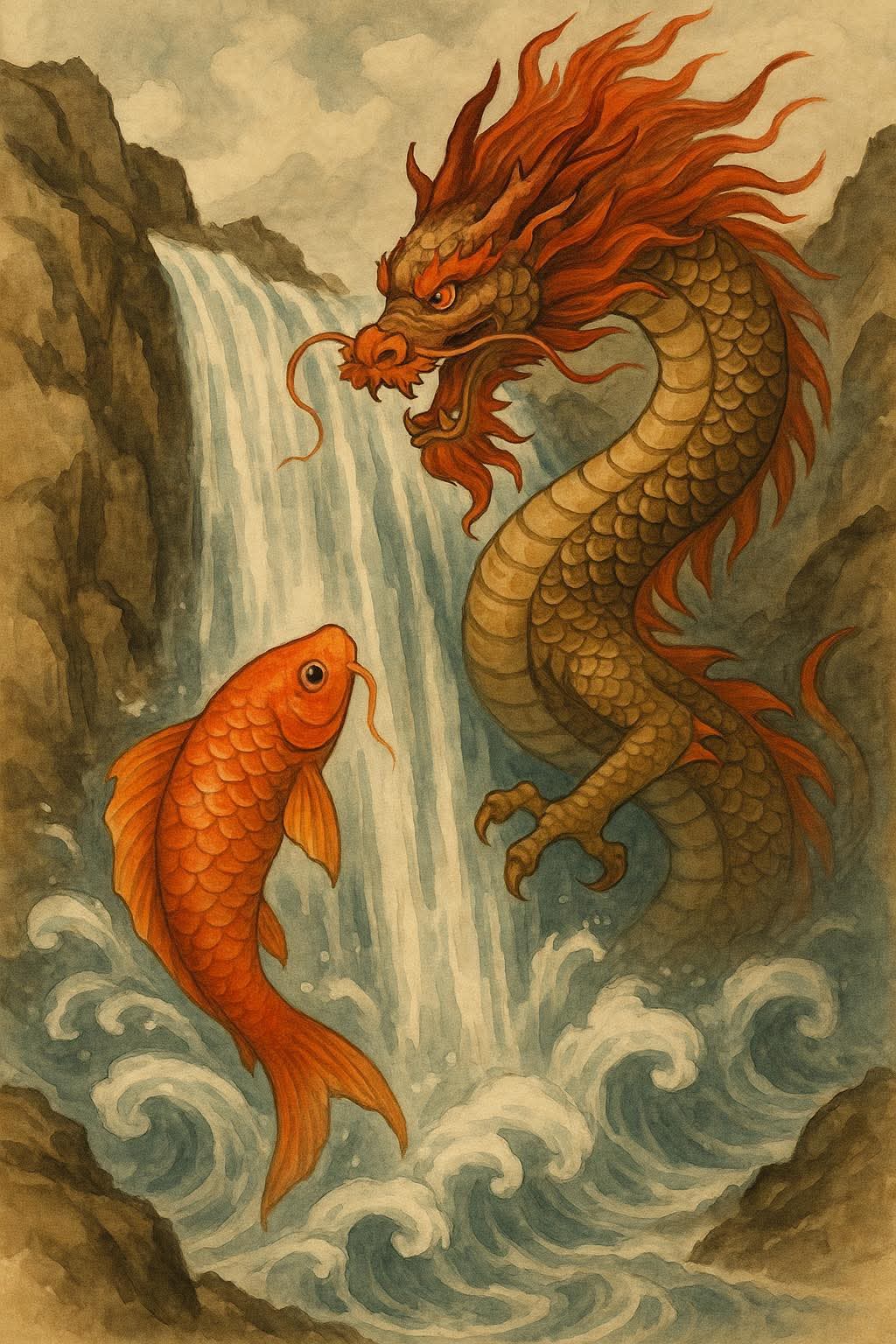
Spring Retreat May 22-24 2026
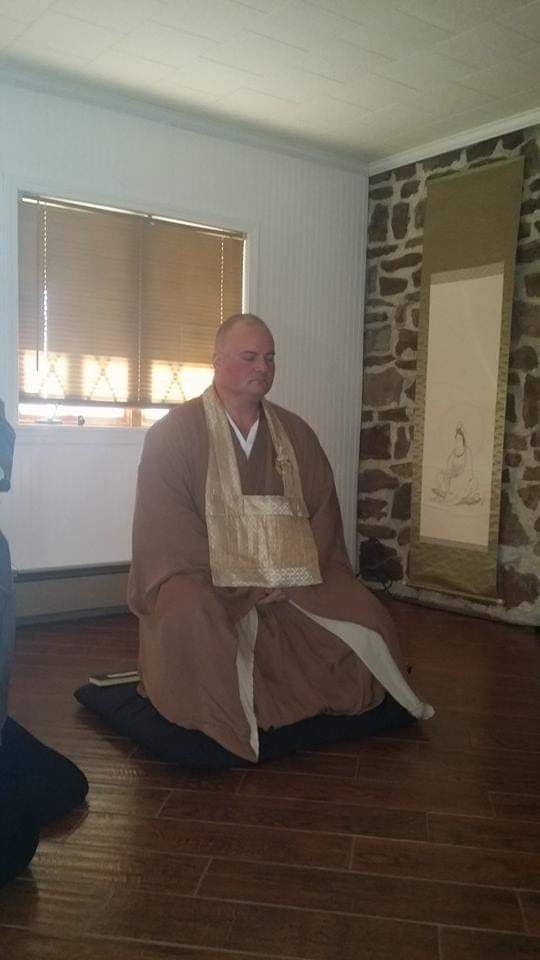 May 22-24 2026 Sesshin will be a beautiful time of year to enjoy the wild flowers and renewed life within the valley. Spring Sesshin will be held in Nazareth, Pennsylvania which is located 1.5 hours from New York City and 1 hour from Philadelphia. Bus routes are near-by and pickups can be arranged. For more information, please contact:
Ph. – 484-735-0636
Email – ryuun@ptd.net.
Sesshin, literally “to collect the mind”, is the Zen Buddhist seclusion or intensive period, consisting of 3-14 days of silent meditative practice. Included in these periods are daily zazen (meditation), chanting, communal meals, Dharma Talks (sermons), samu (work) periods, and private interview twice daily with Ryuun Joriki Baker, Osho.
During Sesshin, the Zen Student concentrates fully on their practice by collecting and mending the unbalanced energies of mind. This balance of mind we so desperately seek feels hidden from us in our daily lives. We seek outwardly for that which we perceive we are lacking. It is only with a deep commitment, and a willingness to face ourselves honestly, that we are able to break through and realize the perfection that is Tathagata. This systemic realization stokes the flames of true wisdom which burns brighter and brighter as we continue to combust and burn away our delusions and attachments. The awakened mind is beyond concept, and the path of liberation is a backwards step. Sesshin is a time to dedicate ourselves to the exploration of this great matter, and a time to realize the vast love and wonder and beauty that surrounds us.
Zen Sesshin October 6-8 2013 (residential retreat)
Sesshin, literally “to collect the mind”, is the Zen Buddhist seclusion or intensive period, consisting of 3-14 days of silent meditative practice. Included in these periods are daily zazen, chanting, communal meals, Dharma Talks/Teisho (sermons), samu (work) periods, and private interview (Dokusan) twice daily with Ryuun Joriki Baker, Osho.
During Sesshin, the Zen Student concentrates fully on their practice by collecting and mending the unbalanced energies of mind. This balance of mind we so desperately seek feels hidden from us in our daily lives. We seek outwardly for that which we perceive we are lacking. It is only with a deep commitment, and a willingness to face ourselves honestly, that we are able to break through and realize the perfection that is Tathagata. This systemic realization stokes the flames of true wisdom which burns brighter and brighter as we continue to combust and burn away our delusions and attachments. For centuries, philosophy and theology have tried to explain and conceptualize this process, their attempts are intrinsically shallow and hollow at best. The awakened mind is beyond word and letter, and the path of liberation runs straight ahead. With one true cut, we free fall into the vast emptiness of shunyata. Sesshin is a time to dedicate ourselves to the exploration of this great matter, and a time to realize the vast love and compassion of the Bodhisattva.
Seeing into a koan versus knowing a koan.
I always let students know that many times “passing” a koan is not really “knowing” it. When we “pass” a koan we merely see into it (kensho), it does not mean in anyway that we have completed it. As a matter of a fact we never “complete” a koan. If we continue to practice over the years, we may realize a koan’s greater depths repeatedly. I always say the best koans are Genjo Koan, or life koans. When we have insight into a koan, we have a basic understanding of its feel and expression. When confronted with this koan again organically, our dokusan experiences should allow a subtle grounding. Over and over we realize greater depths, endless dimensions. There is no meandering, daydreaming or bells to give pause when confronted with an organic nanto koan. Life comes at you head-on, indifferent to invitation and without reserve. Will you swerve and panic, or will you exhale and go straight on? 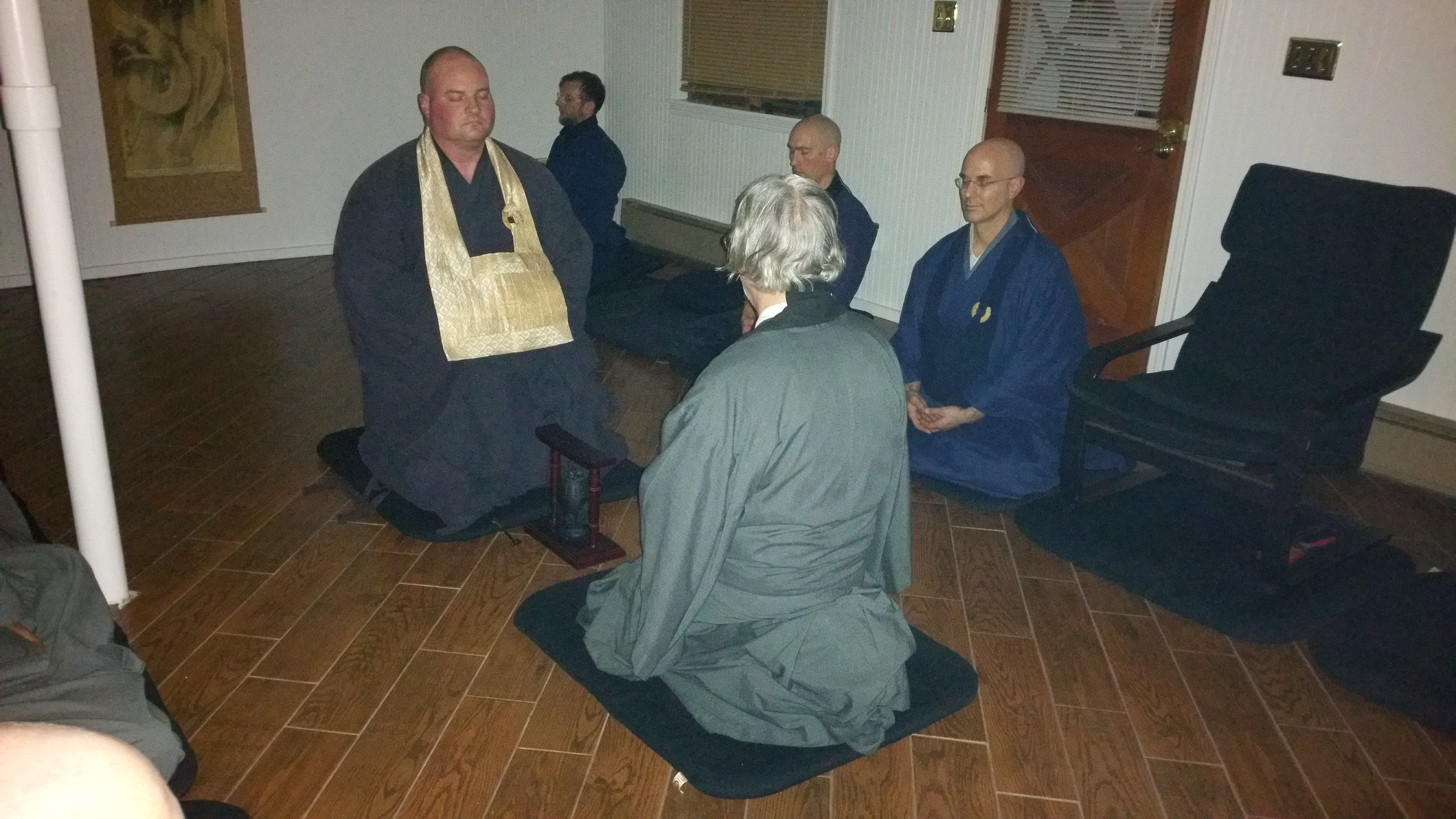
Private Teachings
Gassho, Ryuun Joriki Baker, Osho offers private Zen Buddhist Instruction on Wednesdays and Thursdays via zoom or in person at the temple Tuesday afternoons. These private sessions are 1 hour and are designed for those who are interested in the attention and intimacy that only a “one on one” teaching environment can offer. These sessions include opening tea, Zen Dialectic Techniques (Hybrid of Koan Work and Counseling), meditation instruction, meditation, Zen Form, koan work/interview, and integrative techniques.
If interested, please email: Joriki@BlueMountainZendo.org
Phone: 484-735-0636
Present
 So much talk about abiding or finding the present moment. Take a breath, you can not escape the present moment. There is no need to “find” it. You don’t fall in and out of it, you are it. So no matter where you are, no matter how you feel or think, you are awake and manifest in full.
Combustion
The zendo is a combustion chamber, it burns away that which has no true substance, and reveals the substance of truth which remains.
Blow wind blow
Blow wind blow, blow as you might, nothing is disturbed!
